Olympic Dream (May 2005)
The doubts behind London’s Bid
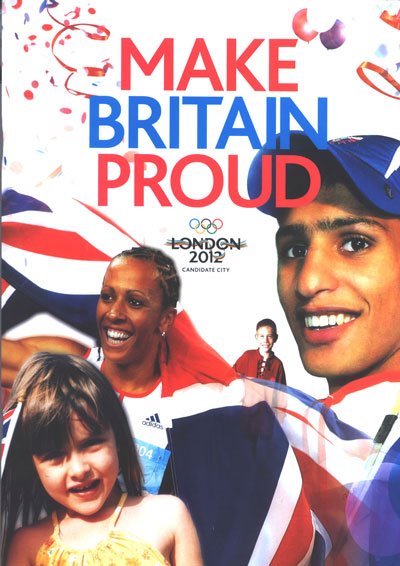
The campaign to support London’s Olympic bid is gaining momentum as we approach the final decision this coming July. Millions of pounds have been spent already in the project but nevertheless there hasn’t been yet a full-scale public debate explaining the details and implications of the project. Support for the bid is growing but so is the resistance to London’s aspirations to hold the Olympic games in 2012.
The results of a government commissioned pool showed 73% of the people consulted supported the bid even after learning about the financial implications. Several key figures in politics and sports have also come out to support the bid. The government says the project is a unique opportunity to regenerate East London, that it will create over 3000 jobs, attract a record-breaking number of tourists and leave a feel-good atmosphere behind. Many factors make of London a possible winner. Several corporate sponsors have already shown support for the bid and venues such as Wimbledon, the Dome, Alexandra Palace and Excel exhibition center can be easily converted to attend sporting events.
Most of the other bids present little opposition to London. New York’s bid has been overshadowed by a row over the building of one venue, and the United Sates already hosted recently the summer Olympics in Atlanta and the winter games in Salt Lake City. Madrid received compliments from the IOC but Barcelona hosted the games in 1992. Istanbul, Moscow, leipzeist, Rio de Janeiro and Havana have been struggling with local support from business. London’s main rival is Paris who is leading the race as most of its venues are ready and transport facilities in the French capital are superb. On the other hand there are many obvious factors that complicate London’s chances. For a long time the city has been struggling with transport regeneration. The privatization of the tube has been in the public agenda for almost a decade now and has seen little results. The city’s problems to receive the usual flow of tourists that visit during the high seasons would definitely worsen during the games, diminishing the tourism boosting argument. The two locations short listed for the building of the Olympic village are somewhat problematic. The Land Development Agency has already bought some land in Hackney Wick but the area has precarious transport links. Stratford Rail yards are heavily populated and issues related to congestion could create serious difficulties.
Sir bob Scott, who organized the Manchester’s Commonwealth games and two failed Olympic Bids, supported the bid initially but changed his mind recently. He said, “The fiasco over the 2005 World Athletics championship bid has damaged London’s credibility and let’s be honest, Paris has a much better chance.”
Resistance to the bid has increased steadily. The Green party and many other social movements and associations have organized a large-scale campaign against it. Their main march during the reception to the IOC on the 19th of February saw significant popular support. In fact, while most British people believe holding the games is a great idea, local residents in Stratford and Hackney are skeptical about the project.
Tessa Jowel, Culture Secretary, said the costs of holding the games are estimated to be of £2.375 Billion. Council Tax bills in east London are expected to be raised by £20 if the bid is successful.
Annie Rollington, a Greenwich resident, said, “It will cost an obscene amount of money. It should be spent somewhere else like the NHS.” She added, “After the Millennium Dome fiasco you would imagine they had learnt the lesson. Most people in my community oppose the bid. I would much rather see the mayor make some effort to extend tube lines to south London then waist his time with some silly games.”
London Metropolitan police has recently reinforced the threat of terrorist attacks in London, and holding such an event would obviously make the city a more relevant target.
Kevin Blowe, an anti-Olympic bid activist and one of the main organizers of the no-bid campaign, said, “The games will be a financial and environmental disaster. They will lead to even more draconian anti-terror and public order legislation.” He went on to say, “They say anyone raising concerns about the astronomical £2.375 Billion, that will have to be spent between 2005 and 2012, is likely to be written off as opposing much needed regeneration of a socially deprived area. This has closed the public debate on the issue.” Mr Blowe has also raised controversial questions against all arguments to host the games. He claims arguments that the project will develop environmental structures in the city is a lie. “They use as example of their environmental intentions the Lower Lea Valley project. But the project has been discussed for years and it will go through with a bid or without a bid”. He has criticized the government accusing it of lying to the public. “They say the games will create over 3000 jobs. They said the same during the building of the Dome and Excel center in Canning town. Now we know it was false. For instance Newham continues with a high unemployment rate even after a £30 Million regeneration project”. “Worst of all the government has already admitted the new cross rail scheme will not be ready by 2012, while the BAA has made clear that without 3 new runaways it will be impossible to hold the games. BAA, British Airways and Virgin Airline are all corporate sponsors of the bid, what are the odds of them getting their way”?
The games are presented as a unique chance to solve many local problems, but recent sporting events have shown the contrary, even after being declared a success.
Zoe Skinner and Jackie Jonn, two Australians currently living in London, said, “the games in Sydney were great. But recently the government came out to say it actually made a loss in the end. We find it hard to believe London has the capacity to do well. Besides being expensive, Sydney triumphed because it is an open city with lots of free space. London is quite the contrary.”
Last summers two main sporting events, despite the apparent success, were surrounded in controversy. Euro2004 was declared the best European championships ever and Portugal was taken by a wave of patriotism never experienced before. Nevertheless the project costed 3 times more what it was initially estimated. Gilberto Madail, President of the Portuguese football federation said, “I was proud of being Portuguese. All the efforts were worth it, but unfortunately we did not profit as much as we expected.” The case of Algarve’s stadium shows clearly one of the problems of hosting such a big event. 31 Million euros were spent to build the stadium, which hasn’t been used since the championship, and there are no planned events for 2005. The situation led the Portuguese to rename it “white elephant”. The same has happened in Athens after the last Olympic Games.
Altogether it is important to build an open public debate before spending such vast amounts of money in one project and so far there has been little detailed talk about the project. No one questions if the games would be a success but it is impossible not to ask questions relating to the viability of the project.
posted by Activix at 4:43 AM


0 Comments:
Post a Comment
<< Home